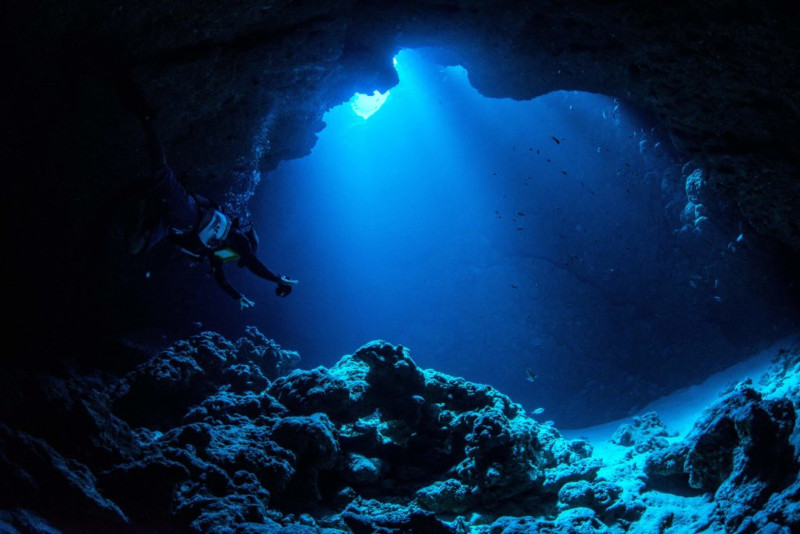
When we think of nightmare monsters, our minds usually cook up image after image of creatures with razor-sharp claws, terrifyingly loud roars, or bloodshot eyes glowing in the dark. We see these ideas repeated endlessly in Hollywood movies, comic books, and horror novels.
But if you pick up an advanced oceanography text or look closely at the scientific discoveries coming out of the western Pacific Ocean, you will realize a profound truth — that human imagination is incredibly limited. The real, physical biology thriving inside the Mariana Trench doesn't just match our worst nightmares; it completely transcends them.
The Mariana Trench is not just a simple valley underwater, but a massive, crescent-shaped scar in the Earth's crust that stretches over 2,500 kilometres in length, edged by islands like Guam and Saipan. At its deepest point, known as the Challenger Deep, it plunges nearly 11,000 metres down into the planet. To put that into perspective, if you took Mount Everest — the tallest mountain above sea level — and flipped it upside down into the trench, its peak would still be submerged under more than two kilometres of icy water.
If a human were exposed to these conditions without a titanium submarine, the weight of the water would instantly shatter our bones into dust. Yet life does not just scrape by in this underworld — it rules it.
For a long time, scientists believed that this extreme environment was a completely sterile desert where no living cell could survive. The parameters of the Hadal Zone — the region extending from 6,000 metres down to the absolute bottom — sound like an architectural blueprint for hell. Total and permanent darkness. Freezing temperatures between one and four degrees Celsius. And the crushing hydrostatic pressure at the bottom, exceeding 1,000 atmospheres — equal to roughly eight tons of force per square inch, or about 16,000 pounds of pressure pressing down on every single thumb-sized piece of an organism's body.
Yet, life does not just scrape by in this underworld; it rules it by completely throwing out the conventional rulebook of biology taught in our school textbooks.
✦ Section I
Tectonic Collisions and Hydrothermal Vents
To understand why the life down here is so strange, we first have to look at the violent geology that created this deep chasm.
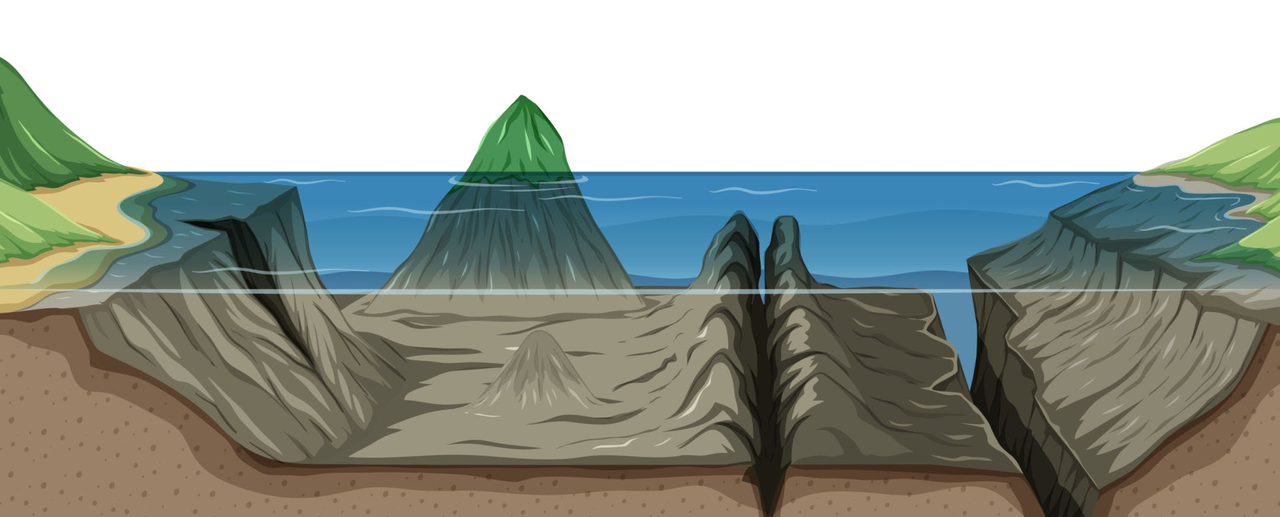
As we learn in our geography and physics classes, the surface of the Earth is broken into massive, moving puzzle pieces called tectonic plates. The Mariana Trench is a direct byproduct of a slow-motion, planetary car crash known as a subduction zone. Here, the ancient, cold, and incredibly dense Pacific Plate is moving westward and colliding directly with the much younger, lighter Philippine Plate. Because the Pacific Plate is heavier, it loses the collision and is forced to dive sharply beneath the Philippine Plate, bending down into the hot mantle of the Earth to form the steep, V-shaped abyss we call the trench.
Because this subduction process is active and continuous, the trench is being constantly remodelled and remains subject to deep-sea earthquakes. Furthermore, as the Pacific Plate sinks deeper into the Earth, it carries massive amounts of water and ocean sediment along with it, which gets superheated deep inside the crust, melting rocks and driving volcanic activity along the Mariana Arc — a chain of underwater volcanoes running parallel to the trench.
This geological chaos sets the stage for a unique ecosystem because while the actual bottom of the Challenger Deep is not home to the towering, mineral-rich "black smoker" hydrothermal vents, the nearby volcanic arc is heavily packed with hydrothermal activity that spews out superheated, mineral-rich water packed with toxic substances like hydrogen sulfide, creating a wild, chemistry-driven environment that substitutes entirely for the missing energy of the sun.
✦ Section II
The Chemistry of Surviving Under Pressure
How does a living, organic cell survive a force that can flatten heavy machinery?
In our tenth-grade chemistry classes, we learn that cell membranes are made of lipids and proteins, and that chemical reactions rely on these molecules being able to move and change shape freely. Under 1,000 atmospheres of pressure, the fluid lipid bilayers that form the outer walls of normal cells get squeezed so tightly that they freeze solid, turning into a rigid barrier that can no longer transport nutrients or expel waste, while structural proteins are forced to change their three-dimensional shapes, preventing them from catalyzing the chemical reactions needed to keep an animal alive.
To combat this molecular nightmare, hadal organisms have evolved a highly specialised chemical shield by filling their tissues with a massive concentration of a specific organic osmolyte called Trimethylamine N-oxide, or TMAO. This molecule acts as a molecular anchor that binds tightly to water molecules, creating a microscopic network that forces the water to support the structure of cellular proteins rather than invading and breaking them apart — allowing enzymes to maintain their flexible shapes and continue functioning normally under bone-crushing weights.
Interestingly, TMAO is the exact chemical compound responsible for the characteristic fishy smell we detect when seafood starts to spoil on land. Because these trench creatures are completely saturated with it, they would have an incredibly intense, concentrated odour if brought to the surface. Furthermore, their cell membranes are packed with highly unsaturated fatty acids that remain completely liquid and pliable at temperatures and pressures that would turn normal vegetable oils or animal fats into hard blocks.
✦ Section III
The Mariana Snailfish — Phantom King of the Deep
The undisputed ruler of this extreme ecosystem: Pseudoliparis swirei.
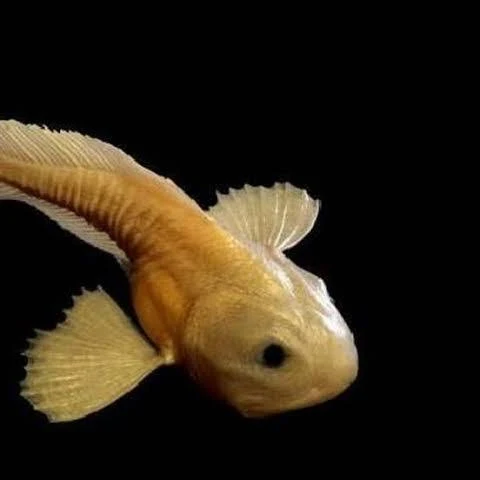
Discovered and officially identified by oceanographers in 2017, the Mariana Snailfish holds the planetary record as the deepest-living fish ever captured or recorded in human history, thriving at depths ranging from 6,198 metres down to a stunning 8,100 metres. When you think of a top predator at the bottom of the ocean, your mind might imagine a giant, armoured shark with massive jaws — but the Mariana Snailfish looks completely opposite to that.
It is a small, delicate-looking creature measuring about 29 centimetres in length and weighing up to 160 grams, featuring a distinctive tadpole-like body shape that tapers down to a thin tail fin with broad, fan-like pectoral fins that allow it to hover and glide effortlessly through the pitch-black water.
Its true marvel lies in its radical, pressure-adapted anatomy: a partially cartilaginous skeleton that lacks heavy calcium bone to prevent fracturing under immense pressure, and an open, fluid-filled skull with special gaps to balance internal and external pressures. It completely lacks a swim bladder, which would otherwise compress and crush the body. Its skin is smooth, translucent, entirely scaleless, and completely devoid of pigmentation genes — because no energy is wasted on colour in a world with zero light.
Because it lives in permanent darkness, its eyes are reduced to tiny, beady black dots with very limited vision capabilities, forcing it to rely instead on a highly developed system of sensory pores along its head and body to detect the tiniest vibrations and pressure waves caused by moving prey. With no sharks or large predatory fish to hunt it, the snailfish roams the absolute bottom of the world like a ghostly king, easily out-manoeuvring and vacuuming up small crustaceans in its jaws.
✦ Section IV
Xenophyophores — The Giant Single-Celled Monsters
In school we learn that single-celled organisms are microscopic. The Mariana Trench disagrees.
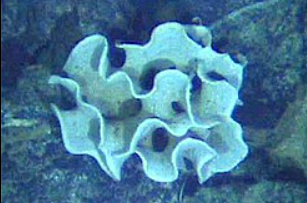
Xenophyophores are single-celled organisms belonging to a group of giant protozoans that are multinucleate — meaning that a single mass of cytoplasm contains thousands of individual nuclei working together, allowing them to grow from a few millimetres up to twenty centimetres across, which is larger than a human hand or a standard school textbook.
To protect its giant, singular body, a xenophyophore constructs a delicate, elaborate shell called a test through a process called agglutination, where it wanders the muddy floor of the trench to pick up sediment particles, mineral grains, sponge spicules, and the discarded shells of microscopic plankton, gluing them all together using an organic cement that it secretes from its own body into wild, ruffled shapes.
The internal anatomy of a xenophyophore includes the granellare — the main body consisting of a branching system of tubes containing the active cytoplasm — and stercomes, which are long strings of individual waste pellets wrapped in organic membranes that the organism stores inside its own shell to reinforce its structure.
But the strangest thing about these giant cells is that they act like biological vacuum cleaners for heavy metals and radioactive materials, selectively absorbing elements from the icy seawater and concentrating them inside their bodies at mind-boggling levels. Studies have shown that species of xenophyophores contain unusually high concentrations of heavy elements like lead, zinc, and uranium, and in certain genera like Shinkaiya, the body tissue contains highly toxic levels of mercury — yet they remain entirely unaffected by these poisonous materials while thriving in toxic mud that would kill almost any other living creature on the planet.
✦ Section V
Amphipods and the Frenzy of Marine Snow
If the snailfish is the king, the amphipods are the clean-up crew — and they are anything but small.
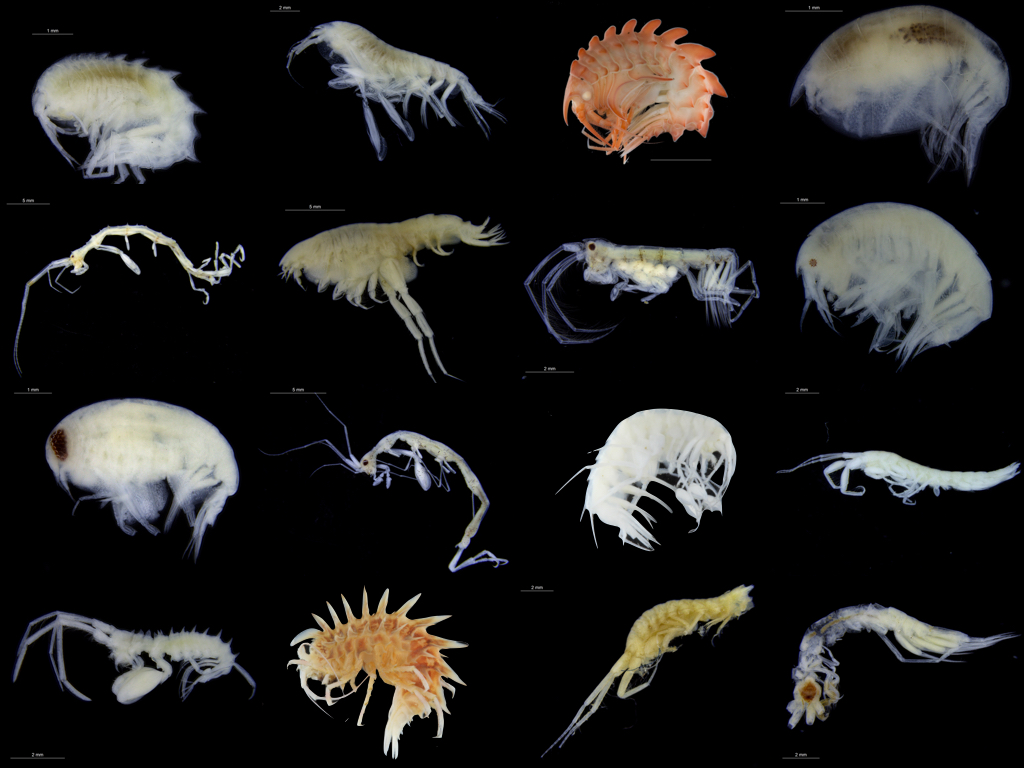
When most people think of an amphipod, they think of the tiny, harmless sand fleas found jumping around on tropical beaches or swimming in local freshwater ponds — usually just a few millimetres long. But down in the depths of the Mariana Trench, amphipods undergo a phenomenon known as deep-sea gigantism where they reach lengths of up to 140 millimetres, resembling massive, pale, albino shrimp with heavily compressed bodies and long hairy antennae.
These creatures are extraordinarily abundant on the muddy bottom of the trench. When oceanographers drop baited traps filled with fish meat down into the Challenger Deep, thousands of these giant amphipods emerge from the darkness within hours, completely swarming the bait in a frenzied, writhing cloud.
The survival strategy of these hadal amphipods relies on an incredible digestive system adapted to eat carrion — the decaying bodies of dead whales, fish, and birds that slowly sink down from the upper ocean over weeks and months in a phenomenon known beautifully as marine snow. When a large carcass hits the trench floor, the amphipods can consume massive quantities of food in a single sitting. Some species have developed specialised piercing and sucking mouthparts that allow them to bore directly into tough materials like waterlogged wood or animal bones that drift down from human shipping lanes. These tiny monsters also serve as the primary food source for the Mariana Snailfish, creating a tight, hyper-efficient food web where absolutely nothing is wasted.
✦ Section VI
Invisible Extremophiles — The True Biological Engine
The microscopic world beneath the trench floor runs a completely alternative energetic engine for the planet.
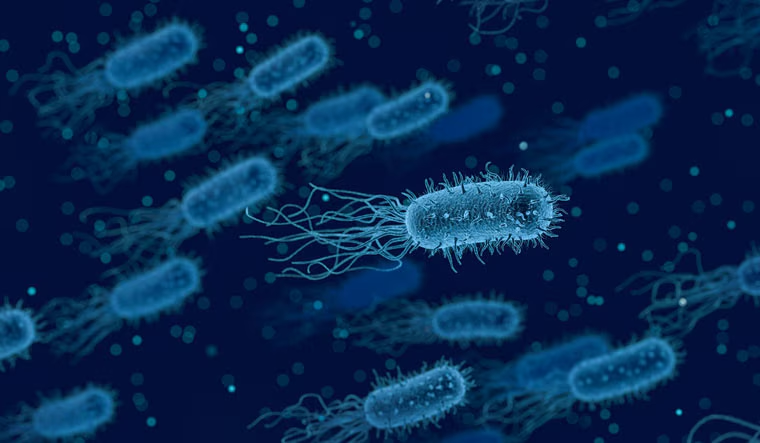
In the shallow parts of the ocean that we see on television, the entire food web is driven by photosynthesis — where phytoplankton use sunlight to turn carbon dioxide and water into sugars. But in the permanent midnight of the trench, microbes must use a completely different chemical process called chemosynthesis. Instead of relying on solar energy, these highly specialised microorganisms break down the chemical bonds of inorganic molecules like hydrogen sulfide, methane, and ammonia that seep out of the tectonic subduction zones and nearby hydrothermal fields, turning these toxic, boiling chemicals into pure organic food.
Scientists studying sediment samples retrieved from the absolute bottom of the trench have classified these microbes into several mind-blowing groups of extremophiles:
Piezophiles — microorganisms that do not just tolerate high pressure but physically require it to live. If you bring them to the surface, their cell walls will actually rupture from the lack of pressure.
Psychrophiles — extreme cold-loving microbes whose metabolic processes use specialised antifreeze proteins to prevent the water inside their cytoplasm from forming jagged ice crystals that would pierce the cell from within.
Thermophiles — heat-loving microbes living directly on the margins of hydrothermal vents that can survive and reproduce at temperatures well above 100 degrees Celsius, because the extreme pressure of the deep ocean prevents the water from turning into steam.
This microbial soup forms the true, invisible foundation of the hadal ecosystem, covering the fine, muddy sediments of the trench floor like a living carpet and converting toxic chemical waste into a rich source of nutrients that feeds the entire food chain.
✦ Section VII
Bioluminescence — Eerie Flashlights in the Shadows
Below 1,000 metres, the darkness is absolute. And yet the trench glows.
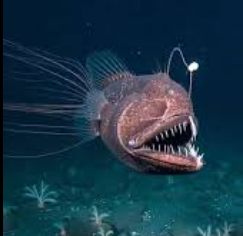
If you were to turn off the artificial lights of a submarine, you would see that the trench is sparkled with tiny, eerie flashes of blue, green, and yellow light produced by bioluminescence — the production and emission of light by a living organism through a controlled chemical reaction inside their bodies, typically occurring when a compound called luciferin reacts with oxygen and is catalysed by an enzyme called luciferase to release pure, heatless light energy.
In a world where sight is non-existent, light is the ultimate tool for survival. Predators like the famous anglerfish or the long-fanged viperfish possess glowing, bioluminescent bulbs attached to long, modified spine fins on their heads to twitch as bait and lure unsuspecting victims directly into their mouths.
Other organisms use specific, flashing light patterns like Morse code for mating — signalling their location, health, and species identity to potential partners drifting through the void. Meanwhile, some small shrimp and squids emit a cloud of glowing, luminescent slime directly into the eyes of an attacking predator as a defence mechanism, blinding the attacker and lighting them up in the dark, turning them into an easy target for even larger predators while the original victim slips away into the safety of the shadows.
✦ Section VIII
Human Traces in the Earth's Deepest Scar
The most remote place on our planet is not as untouched as we would like to believe.
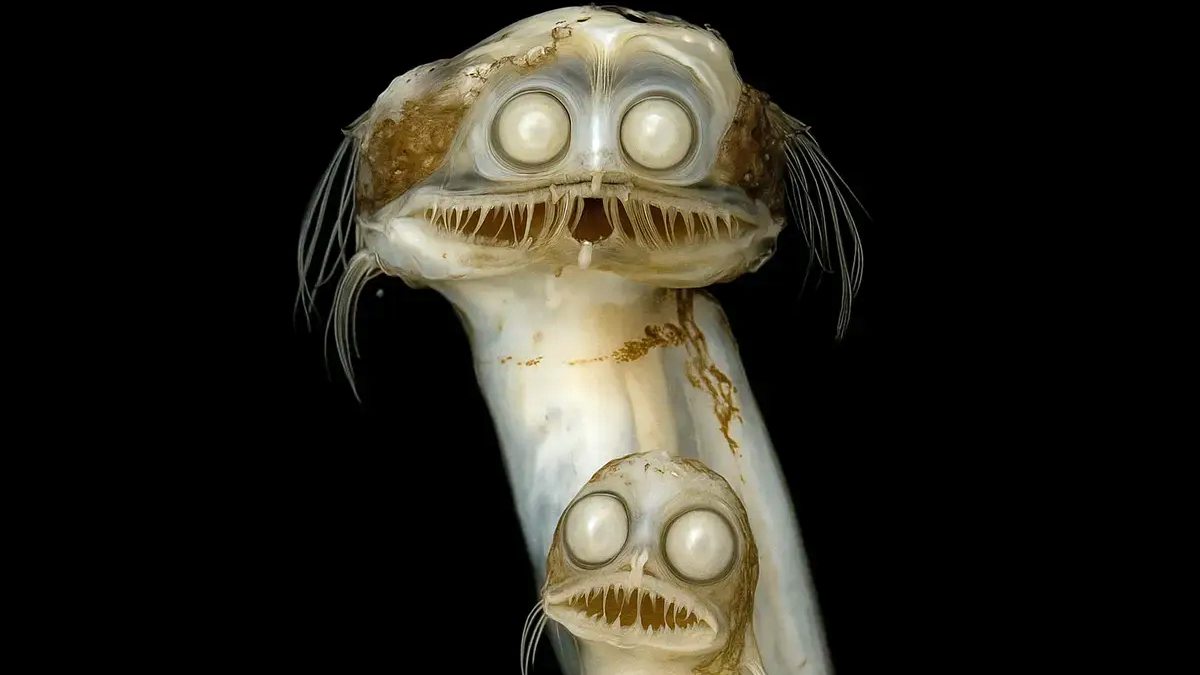
editor to Aakshi: ...where did you even find this picture? ✦
Despite their terrifying appearance and unbelievable chemical shields, the life forms of the Mariana Trench are facing a new, unnatural nightmare in the form of human interference. Because these animals live in an environment with freezing temperatures and very limited food energy, their metabolic rates are incredibly slow — meaning that many deep-sea fish and crustaceans grow at a snail's pace, take decades to reach reproductive maturity, produce very few eggs, and can live for centuries. This makes their populations incredibly fragile.
If an ecosystem down here is disrupted or damaged by human pollution or deep-sea mining exploration, it could take hundreds of years for the community to recover — if it ever recovers at all.
Even though the Challenger Deep is the most remote and isolated place on our planet, deep-sea expeditions have recently discovered terrifying signs of human activity at the very bottom: plastic bags, synthetic candy wrappers, and microplastic fibres inside the digestive tracts of giant amphipods recovered from 11,000 metres down. Because the trench acts like a giant funnel for the ocean, all of our floating surface trash eventually breaks apart and settles into the abyss, creating a toxic layer of sediment that threatens this fragile world.
✦ Conclusion
Life on Earth is completely interconnected.
Ultimately, the Mariana Trench teaches us a beautiful yet humbling lesson — proving that life on Earth is completely interconnected, from the green trees enjoying the bright Indian monsoon sunshine to the ghostly snailfish gliding over toxic vents in the absolute blackness of the Pacific floor.
The hadal abyss is a sacred, surreal wilderness that we are only just beginning to understand. Eleven kilometres below the surface, in a world of crushing darkness and impossible pressure, life has found a way — not despite the conditions, but because of them. The trench does not merely defy our nightmares. It renders them quaint.
And one we must protect at all costs. ✦
References & Bibliography
- NASA Earth Observatory: New View of the Deepest Trench — data on subduction dynamics, tectonic plate measurements, and geographic metrics of the Mariana Arc. science.nasa.gov
- Mariana Trench Marine Studies: Life in the Hadal Zone — information regarding marine snow decomposition, chemosynthetic pathways, and physiological impacts of hydrostatic pressure environments. marianatrench.com/life
- Wikipedia, The Free Encyclopedia: Xenophyophorea — anatomical terminology including granellare, stercomata, and agglutinated mineral test composition in deep-sea protozoa. en.wikipedia.org
- Encyclopædia Britannica: Amphipod Order Characteristics — morphological analysis of crustacean growth cycles, deep-sea gigantism traits, and scavenger foraging behaviors. britannica.com
- AZoLifeSciences Research Portal: Microbial Life in the Mariana Trench — classification of deep-sea extremophiles including barophilic, psychrophilic, and thermophilic metabolic frameworks. azolifesciences.com
Written by
Aakshi
Synthesis · Oceanography