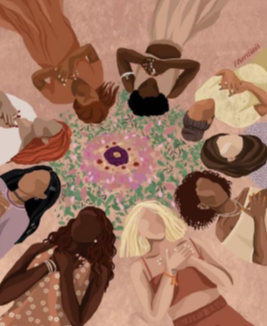
The Before, Now and After of Feminism
Historians generally divide the feminist movement into historical "waves" spread across time.
Proto-Feminism (Pre-19th Century)
Long before the French philosopher Charles Fourier coined the term "feminism" in 1837, many writers were already advocating for women's equality. These early thinkers are known as proto-feminists.
- Christine de Pisan (14th Century): A European philosopher who spoke out against the unfair treatment of women in Medieval Europe, where women could not own property, get an education, or participate in public life.
- The Enlightenment Era: While European thinkers wrote heavily about liberty, equality, and natural rights, they routinely excluded women from these concepts. Female intellectuals like Olympe de Gouges and Mary Wollstonecraft quickly pointed out this hypocrisy, writing powerful political pieces demanding that women be granted the same opportunities as men.
First-Wave Feminism (Late 19th Century – 1920)
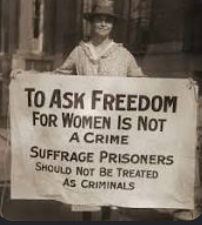
In the late 19th century, these political ideas grew into an organized activist movement. In the United States and Great Britain, women who were already active in the abolitionist (anti-slavery) movement began applying the concepts of freedom to their own lives.
In 1848, activists gathered at the Seneca Falls Convention and drafted a list of demands, most notably the right to vote (suffrage). While voting was the main focus, other thinkers like Emma Goldman and Charlotte Perkins Gilman argued that women needed deep social freedom from sexism, not just a ballot. They criticized mainstream leaders like Susan B. Anthony and Elizabeth Cady Stanton for focusing almost exclusively on upper-class white women while ignoring working-class struggles and Jim Crow racial segregation.
The suffragist movement fought for over 70 years. Eventually, activists like Alice Paul adopted radical tactics such as mass parades and public protests to force political change. In 1920, the United States passed the 19th Amendment, officially granting women the right to vote.
Second-Wave Feminism (1960s – 1970s)
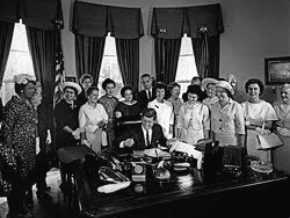
After winning the right to vote, the movement lacked a clear direction for a few decades. However, the 1960s and 70s sparked the Second Wave, heavily inspired by the Civil Rights Movement and anti-Vietnam War protests.
This wave looked beyond basic legal rights to demand institutional and cultural change, focusing on equal pay, equal job opportunities, and reproductive freedom. Activists established women's studies departments in universities and opened the first rape crisis centers. Major legal victories included the Equal Pay Act of 1963 and the Roe v. Wade decision in 1973.
Like the first wave, the second wave was criticized for being led primarily by middle-class white women. However, notable Black feminists like Audre Lorde and Alice Walker wrote groundbreaking works detailing the deep, inseparable ties between racism and sexism.
Third-Wave Feminism (1990s)
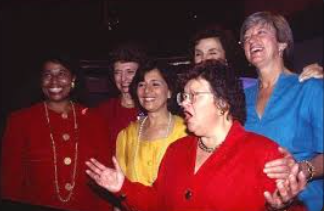
Benefiting from the victories of the second wave, women in the 1990s entered a world with more institutional power than ever before. Third-wave feminists focused on individuality, personal choice, and reclaiming traditionally sexist words and symbols.
While second-wave feminists often felt pressured to reject traditional femininity to be taken seriously in male-dominated spaces, third-wave feminists embraced the idea that being "girly" and being a powerful feminist were not mutually exclusive. Cultural movements like the punk-rock "Riot Grrrl" bands and the activist group Guerrilla Girls defined this era.
Importantly, this wave became much more inclusive. In 1989, legal scholar Kimberlé Crenshaw coined the term intersectionality, the concept of how different forms of discrimination (like racism, classism, and sexism) overlap and impact people simultaneously. While intersectionality was a massive achievement, some critics felt the third wave lacked a unified political goal, sometimes reducing a serious movement to an empty "Girl Power" marketing slogan.
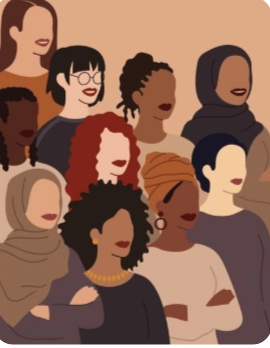
Modern feminism — a movement that benefits everyone ✦
Today, modern feminism emphasizes that gender equality benefits everyone. It is about respecting diverse experiences, removing artificial barriers, and leveling the playing field rather than promoting superiority over men.
However, global progress remains fragile. According to United Nations reports, gender equality faces severe regression worldwide, and no country has achieved full legal equality between men and women.
The UN warns that rising global conflicts, economic pressures, and organized political backlashes are actively rolling back women's rights. For instance, conflicts have caused an 87% spike in sexual violence over a recent two-year period, and only 54% of countries have modern, consent-based definitions of sexual assault.
Despite these major setbacks, grassroots feminist movements continue to win critical battles. Over the last decade, more than 40 countries have strengthened their constitutional protections for women, and 87% of nations now have domestic violence laws on the books.
Fourth-wave feminism, characterized by the #MeToo movement and the 2017 Women's March, emphasizes inclusivity, intersectionality, and advocating for transgender women and women of color. Despite Global Goal 5's adoption in 2015, progress on gender equality remains minimal, the UN warns it will take nearly 300 more years to achieve equality without investment, and women in countries like Afghanistan and the US now have fewer rights than previous generations. Period poverty affects 500 million women and girls globally, while no country has achieved full gender equality. Gender bias undermines society's fabric, yet anyone believing in global gender equality can be a feminist and make meaningful impact by supporting gender equality initiatives worldwide, as empowering women benefits everyone.
Feminism vs. Misandry
A major modern misconception is confusing feminism with misandry (the hatred of men). Aggressive rhetoric online can sometimes blur these lines, leading a significant portion of the public to mistakenly view feminism as a "man-hating" movement. Public surveys show that this misconception usually comes from a basic lack of understanding of what the movement actually aims to achieve.
Feminism is not about taking power away from men; it is about ensuring women have the exact same opportunities to earn that power. Empowering women does not mean devaluing men. In fact, true gender equity helps men by liberating them from strict, toxic gender roles, allowing them to openly express emotions, pursue non-traditional careers, or choose to be stay-at-home fathers without social judgment. While individual man-haters may exist, simple misandry does nothing to advance the actual legal and economic goals of the feminist movement.
Feminism is not about taking power away from men; it is about ensuring women have the exact same opportunities to earn that power.
Feminism vs Misandry is also Equality vs Equity
The relationship between equality vs. equity and feminism vs. misandry reveals how goals differ from methods. Equality is the end goal with equal rights and opportunities for all, while equity is the strategy to achieve it by accounting for historical disadvantages. Similarly, feminism seeks gender equality for all genders and dismantles patriarchy, while misandry means hatred of men and contradicts this inclusive mission.
People often confuse feminism with misandry just as they confuse equality with equity, but feminism is fundamentally about inclusion and fairness, not hatred. Feminism pursues equality as the destination through equity as the path, recognizing that systemic barriers require fair compensation for historical disadvantages. Misandry conversely wants to reverse oppression rather than end it, undermining feminism's true purpose of creating equal opportunities for everyone regardless of gender.
Notable Historical Figures
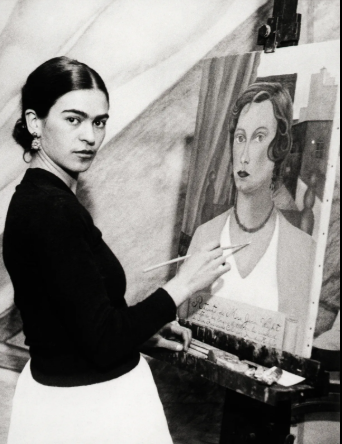
Frida Kahlo (1907–1954)
The famous Mexican painter used her art to bring raw female experiences and identity to the forefront. She openly rejected patriarchal beauty standards by proudly highlighting her unibrow and facial hair in her self-portraits. By dressing in traditional Tehuana clothing, originating from a matriarchal region of Mexico she asserted both her national identity and female power. Kahlo channeled her immense physical suffering from a bus accident and her difficult marriage into masterpieces like The Two Fridas, perfectly embodying the feminist phrase "the personal is political."
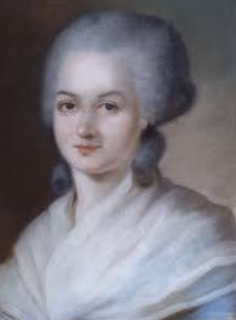
Olympe de Gouges (1748–1793)
A bold French social reformer and writer, De Gouges challenged conventional views on human rights during the French Revolution. She wrote passionately in defense of the abolition of slavery, better maternity hospitals, and the rights of unmarried mothers. In 1791, she published her famous pamphlet, the Declaration of the Rights of Woman and of the Female Citizen. This was a direct, witty response to the Revolution's Declaration of the Rights of Man, pointing out that a free society must grant women the exact same citizenship rights as men.
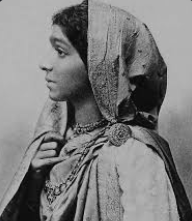
Sarojini Naidu (1879–1949)
An incredible poet and political leader, Naidu masterfully tied the fight for Indian independence to the fight for women's rights. Speaking to the Social Council of Calcutta in 1906, she argued that women were the true "nation-builders" and that India could never be truly liberated from British rule if its women remained oppressed.
In 1917, she helped establish the Women's Indian Association and led a delegation to demand women's voting rights from British authorities. Although early colonial reforms ignored their demands, Naidu traveled to London to present her case directly to the British Parliament. She broke immense barriers at home, becoming the first Indian woman to serve as President of the Indian National Congress in 1925, and she actively mobilized thousands of women to join nationwide nonviolent resistance movements.
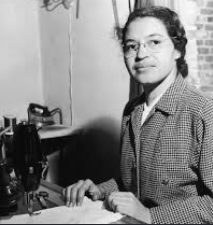
Rosa Parks (1913–2005)
While famous for her brave refusal to give up her bus seat, Rosa Parks's lifelong activism was deeply rooted in an early form of intersectional feminism. Long before the Montgomery Bus Boycott, she worked as an NAACP secretary investigating brutal cases of racial and sexual violence against Black women in the American South, notably fighting for justice for Recy Taylor in 1944. Parks understood that racial justice could not be separated from gender justice. Her grassroots work protected Black women's physical safety, mobility, and civic power, proving that resistance requires challenging both racial and gender-based oppression.
Major Legal and Social Cases
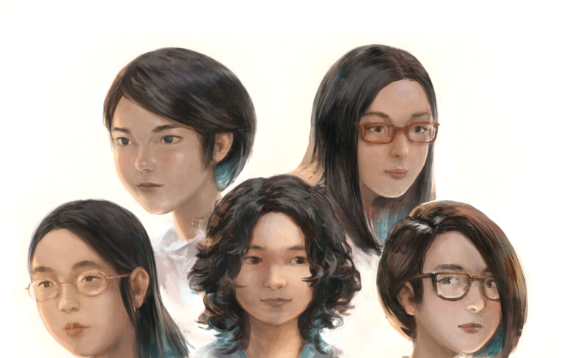
An illustration of the five activists: Wu Rongrong, Zheng Churan, Wang Man, Wei Tingting, and Li Tingting ✦
On March 7, 2015, the eve of International Women's Day, five young Chinese activists Wu Rongrong, Zheng Churan, Wang Man, Wei Tingting, and Li Tingting were arrested by the Chinese government. Their crime was simply planning a public awareness campaign against sexual harassment on public transit.
Their arrest triggered immediate international outrage and incredible solidarity. Over 300 civil society groups globally demanded their release, and activists worldwide organized "Mask Demonstrations," wearing masks printed with the faces of the five women. After 37 days of intense international pressure, the women were released on bail. While a rare victory for local activism, they remain under state surveillance, showing the immense personal risks feminists face under authoritarian regimes.
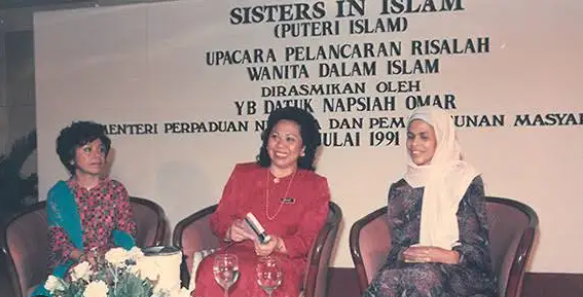
Founded in Malaysia in 1988, Sisters in Islam is an organization of Muslim women dedicated to tackling gender injustice within Islamic legal systems. By using a contextual, rights-based reading of the Quran, they work to show that Islam inherently promotes a world of love, mercy, and gender equality. Today, SIS stands at the forefront of modern efforts to reform discriminatory family laws and policies within Muslim communities globally.
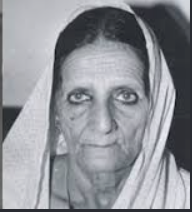
Shah Bano Begum, a Muslim woman in India, was divorced by her husband and subsequently filed for financial maintenance under Section 125 of India's Criminal Procedure Code. Her ex-husband challenged this, arguing that under Islamic personal law, he was only required to support her for three months post-divorce (the iddat period).
The Supreme Court of India ruled in favor of Shah Bano, declaring that civil welfare laws apply to all citizens regardless of religion and that personal laws cannot leave a divorced woman destitute. While the ruling was a massive win for women's rights, it sparked a major political backlash over religious personal laws, eventually leading the Indian Parliament to pass a restrictive law in 1986 to appease conservative critics.
Feminism and Powerful Archetypes in World Religions
Feminist theologians and scholars often look to ancient mythologies and religions to find symbols of complete female autonomy, strength, and intellectual power.
- Artemis / Diana (Greek & Roman): The goddess of the hunt represents pure independence. She maintained absolute authority over her own body, lived entirely on her own terms in the wilderness, and refused to submit to male authority, making her a historical symbol for women's self-sufficiency.
- Ishtar / Inanna (Mesopotamian): As the goddess of both love and war, Ishtar shattered the patriarchal stereotype that women must only be passive or domestic. She represents complex agency, proving that femininity can encompass both fierce protection and deep passion.
- Athena (Greek): Born directly from the head of Zeus, Athena represents supreme intellect, wisdom, and military strategy. She operated effortlessly in historically male-dominated fields while maintaining her distinct female identity, countering ancient claims of female intellectual inferiority.
- Hera (Greek): As the Queen of Olympus, Hera held a divine rank that commanded respect from gods and mortals alike. Modern feminist interpretations focus on her supreme institutional authority and her constant struggle to maintain her dignity and power within a chaotic patriarchal hierarchy.
- Kali (Hindu): Kali represents raw, unapologetic cosmic energy (Shakti). Her fierce nature is celebrated as a divine force that destroys evil and injustice. Her imagery validates female anger against oppression, showing that rage against injustice can be a sacred, transformative tool.
- Durga (Hindu): A warrior goddess who rides a lion into battle, Durga defeats powerful demons entirely on her own without any male assistance. She represents absolute self-sufficiency, protection, and the active power required to restore cosmic justice.
- Devi (The Great Goddess in Hinduism): In traditions where Devi is worshiped as the supreme divine force, she is viewed as the ultimate source of all creation, completely independent of male deities. This concept directly challenges patriarchal religious structures by placing the feminine energy at the absolute center of the universe.