In this article
This piece moves from the spectacle to the strategy — you're welcome to read it all, or jump straight to what catches your eye.
-
i.
What is the Met Gala? The origins, the theme, and what it all means
-
ii.
Where Couture Became Art The night's most unforgettable looks, one by one
-
iii.
The How Behind the Wow MIV, the Halo Effect, Bourdieu, and the business behind the brilliance
✦ ✧ ✦
"I wanna dance with somebody…"
The words that opened it all
The words floated through the air as the opening performance began. At the centre of it all stood Joshua Henry, charming as always in a striking red suit, owning the stage with effortless charisma as the melody of “I Wanna Dance with Somebody” by Whitney Houston, a timeless classic, filled the hall. The ambience radiated elegant confidence as dancers in tailored black suits brought their choreography to life, the performance unfolding like an artwork in motion.
And thus began the Met Gala, 2026.
✦ Section I
What is the Met Gala?
From a 1948 fundraiser to fashion's most powerful cultural spectacle
The Met Gala is a fundraiser event that originated in 1948 for the Costume Institute which merged with the Metropolitan Museum of Art in 1946. Since its inception, the Costume Institute has been the only curatorial department at the Met required to raise its own operating funds. Over the decades, the event has evolved from an elite fundraising dinner into one of the world’s most influential cultural and fashion spectacles, shaping trends in media, branding, and the global luxury market.
The 2026 Met Gala was co-chaired by Beyoncé Knowles-Carter, Nicole Kidman, Venus Williams and Anna Wintour, with Jeff Bezos and Lauren Sánchez-Bezos serving as honorary chairs. This year’s theme, “Fashion Is Art,” encouraged a perception of fashion as art and creative expression, transforming the Met Hall into a living gallery of storytelling and artistic interpretation.
In the words of Sinéad Burke, CEO and Founder of Tilting the Lens “Fashion is art because of embodiment. When we wear a garment on our body, different kinds of bodies, that is what makes it art.” In light of this powerful perspective, Sinéad highlighted the exhibition featuring designers such as Sugandha Gupta and Helen Cookman, alongside mannequins representing people with disabilities. Together, they reinforced the idea that fashion is not reserved for one kind of beauty, but instead a celebration of human expression, individuality, and every body that brings art to life.
Some looks embraced elegance and tradition, while others challenged conventional fashion entirely, ranging from sculptural silhouettes to tributes to iconic works of art. Carefully curated yet wildly expressive, the evening’s most dazzling looks revealed how couture could transform the red carpet into both spectacle and statement.
✦ Section II
Where Couture Became Art
Before exploring the How behind the Wow (click here to uncover the business behind the brilliance), let us first step onto the red carpet and revisit some of the night's most unforgettable looks.
The 2026 theme is “Costume Art,” tied to the Metropolitan Museum of Art’s spring Costume Institute exhibition of the same name, which “examines the centrality of the dressed body throughout time and culture, juxtaposing garments and works of art from across the Museum’s vast collection to create pairings that highlight the indivisible connection between clothing and the body,” per The Met.
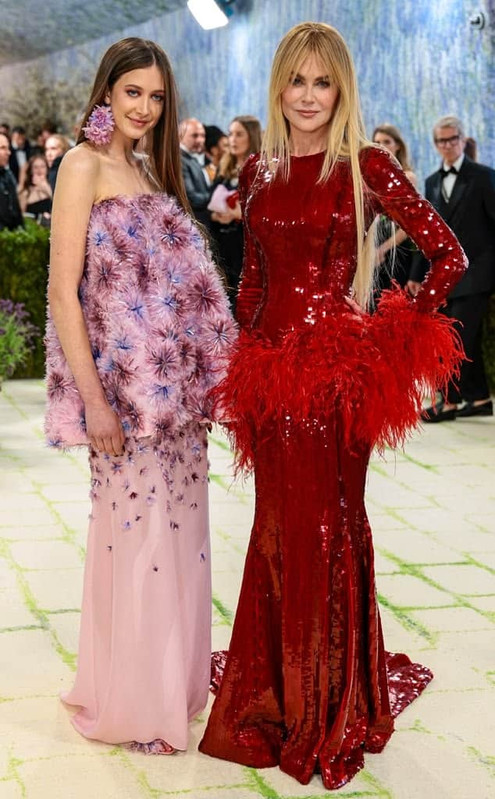
Nicole Kidman & Sunday Rose
Chanel & DiorNicole Kidman arrived alongside her daughter Sunday Rose, who made her Met Gala debut in 2026. Sunday embraced Dior in a soft pink blossoming palette, perfect for her fresh and youthful debut at the Met, almost like a spring flower beginning to bloom.
Beside her, Nicole wore a stunning red Chanel gown styled by Jason Bolden. Despite dazzling at fashion’s biggest night, Nicole jokingly revealed that Sunday still had school the next morning, saying they were “keeping it real.”
Beyoncé & Blue Ivy
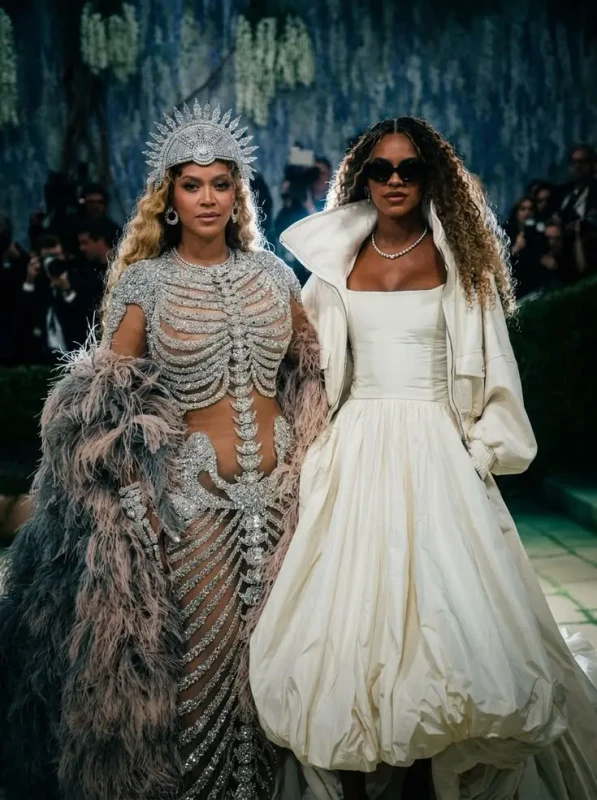
Balmain & BalenciagaAfter a decade away, Beyoncé ensured her return was unforgettable in a diamond-encrusted skeleton-inspired gown designed by Olivier Rousteing, complete with a striking ombré train. Her look celebrated ‘the beauty of the natural body’.
Beside her, her daughter, Blue Ivy made a statement with her debut, representing Gen-Z in a custom Balenciaga look by Pierpaolo Piccioli- a white dress with a bubble hem and a strapless bustier, layered with a cropped bomber jacket and dark sunglasses, accessorized with silver heels and a diamond necklace.
During her Vogue interview at the top of the steps, Beyoncé told La La Anthony about her excitement to have her daughter join her. “It feels surreal because my daughter’s here,” she said. “She looks so beautiful, it’s incredible to be able to share it with her.”
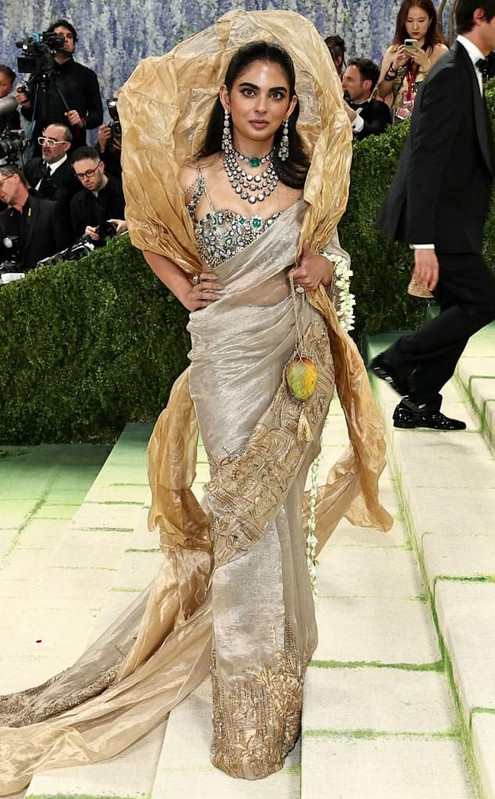
Isha Ambani
Gaurav GuptaWhen Isha Ambani steps onto the red carpet, she does not simply just dress, but curates the moment. At the Met Gala 2026, her custom Gaurav Gupta saree transformed couture into storytelling, blending Indian heritage with artistic expression in the most opulent way. Woven with pure gold threads, the drape featured hand-painted Pichwai-inspired motifs referencing the Ajanta cave murals, while her blouse was embedded with over 1,800 carats of diamonds from her mother, Nita Ambani’s private collection.
A memorable accessory is her mango shaped potli which added a playful contrast to the grandeur of the saree. The jasmine-inspired hair sculpture was where tradition met imagination. Crafted over 150 hours using paper, copper and brass, it reimagined the traditional mogra gajra, blending heritage with contemporary design. Together with the sari's artistic detailing and symbolic accessories, it was a showcase of how couture can be curated as art. The saree became a canvas, the body its frame.
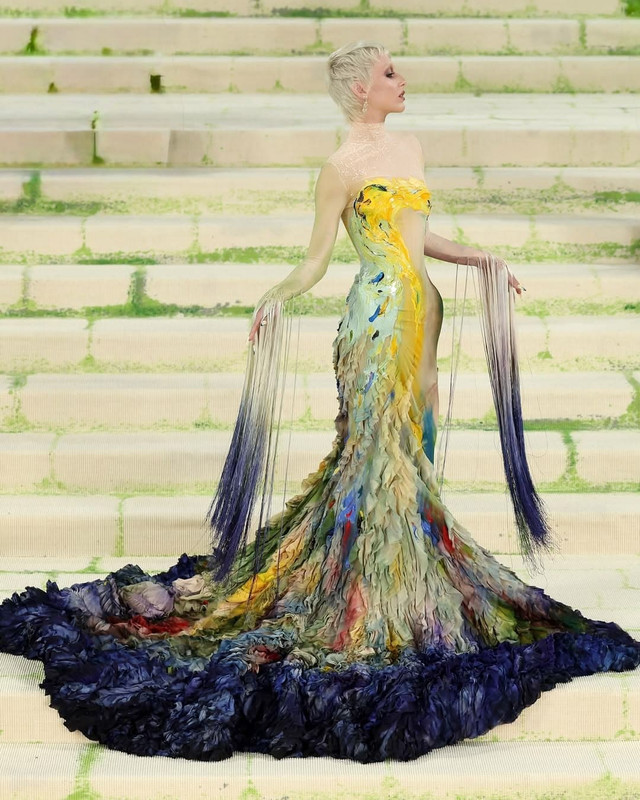
Emma Chamberlain
MuglerEmma Chamberlain grew up in a house full of paintings, her father, Michael Chamberlain, is an oil and watercolor painter; and this year she wore that childhood to the Met. Working with Mugler's new creative director Miguel Castro Freitas, she commissioned artist Anna Deller-Yee to hand-paint her entire custom gown using only traditional fine art materials, the resulting gown was inspired by works from Van Gogh and Edvard Munch, as well as Thierry Mugler's iconic butterfly dress from 1997. Rather than reinterpreting a single piece of art, her garment pulls inspiration from a wide body of Impressionist and Expressionist works, aiming to capture their focus on visible brushstrokes and atmosphere.
The final product turned Chamberlain into a kind of canvas, transforming each brushstroke into a statement in its own right. She described the feeling simply: "I really am someone who enjoys fashion the most when I get to be a complete blank canvas."
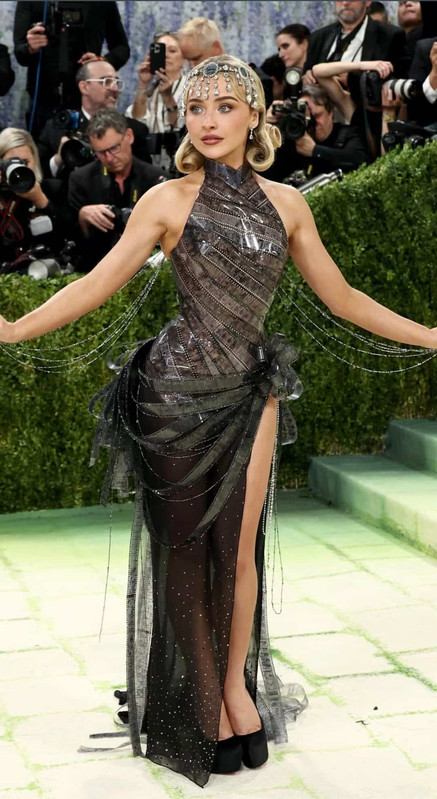
Sabrina Carpenter
DiorSabrina Carpenter took a uniquely cinematic approach to the theme in a custom Dior look designed by Jonathan Anderson. Her gown was crafted from actual 35mm film strips from the 1954 film Sabrina. A matching headpiece featured a pendant on her forehead displaying the film's title card, and her hair was set in soft Old Hollywood barrel curls to complete the cinematic effect. The theme of "Fashion Is Art" could be interpreted a hundred ways, Sabrina's look serves as reminder that cinema too is a form of art.
BLACKPINK
Dior · Saint Laurent · Robert Wun · Chanel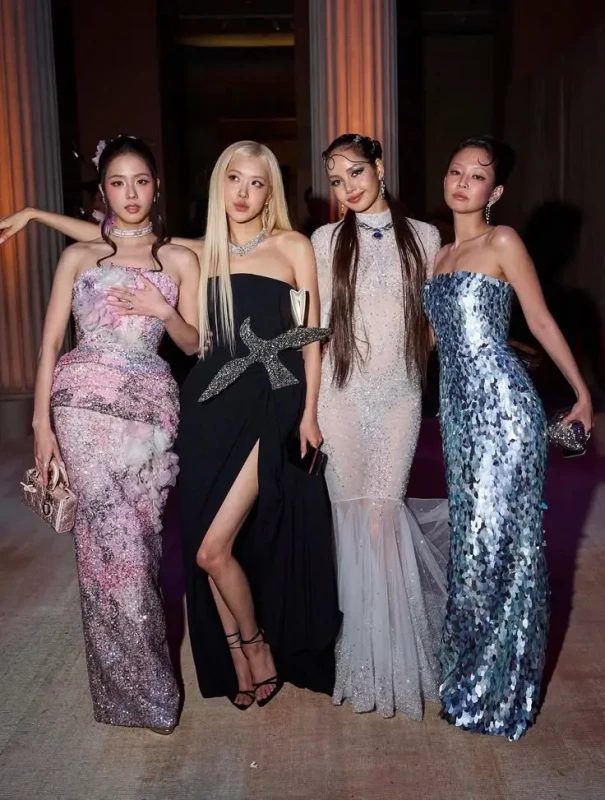
BLACKPINK at the Met Gala, 2026 — a curated exhibition of four worlds ✦
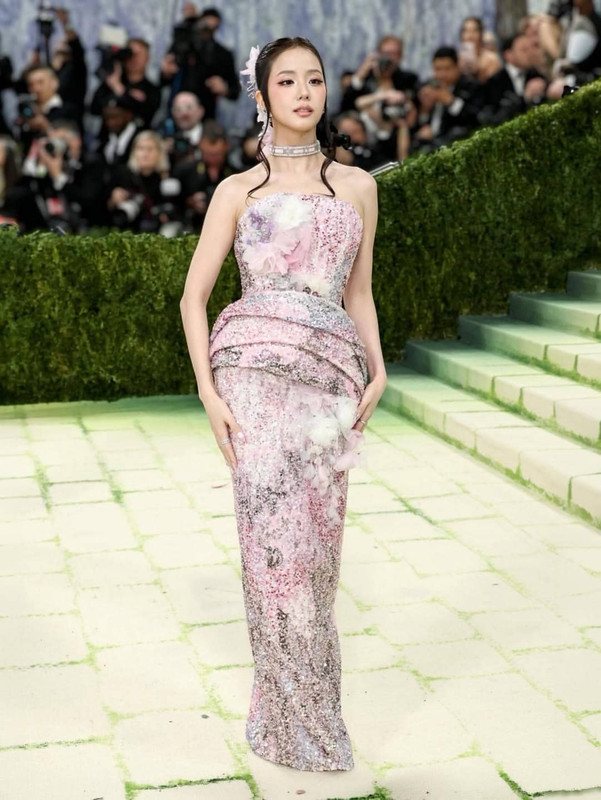
Jisoo
DiorJisoo made her Met Gala debut in a custom Dior gown designed by Jonathan Anderson, reflecting the house’s renewed focus on Impressionism. Delicately embroidered in pink, silver, and white sequins with floral detailing, the look drew inspiration from Impressionist garden paintings, echoing the luminous brushwork of Claude Monet. A matching floral headpiece completed the ensemble, reinforcing its soft, painterly aesthetic.
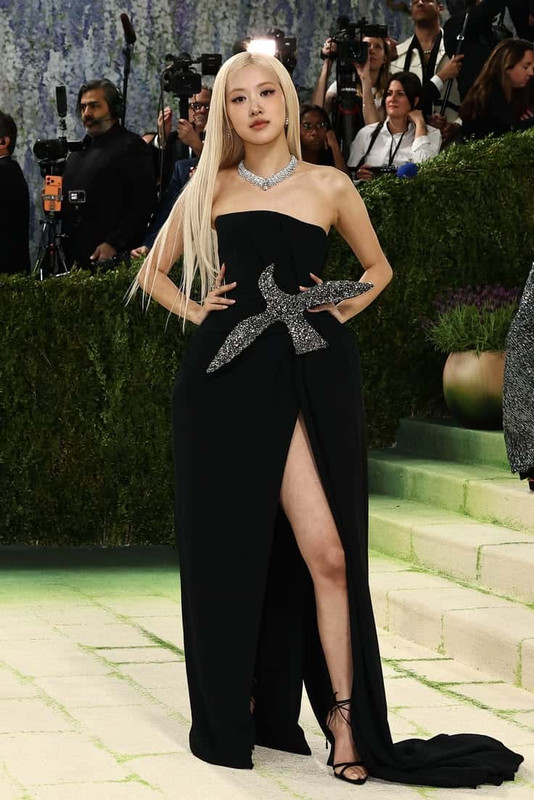
Rosé
Saint LaurentRosé appeared in Saint Laurent, wearing a strapless black gown accented with a bird motif inspired by Georges Braque’s ceiling painting at the Louvre. Designed in collaboration with Anthony Vaccarello, the look balanced modern precision with art-history symbolism, finished with Tiffany & Co. diamond jewellery. Speaking to Vogue, Rosé highlighted the thoughtful placement of the necklace facing the bird motif, noting how the interplay of silver, beads, and light elevated the composition.
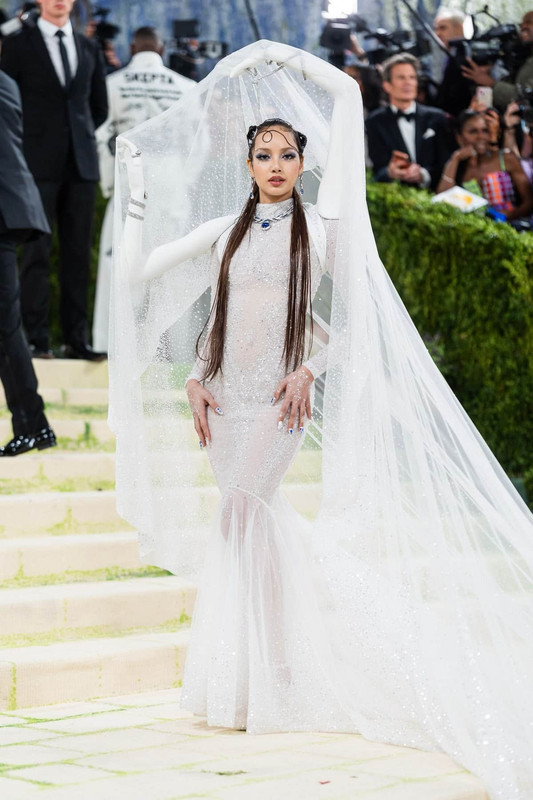
Lisa
Robert WunLisa took a sculptural direction in a custom Robert Wun creation, where fashion became performance. The gown featured 3D-printed arm structures extending outward, shaped through scans of her own body and inspired by traditional Thai dance postures. A sheer veil flowed from the structure, transforming the silhouette into a frozen moment of choreography.
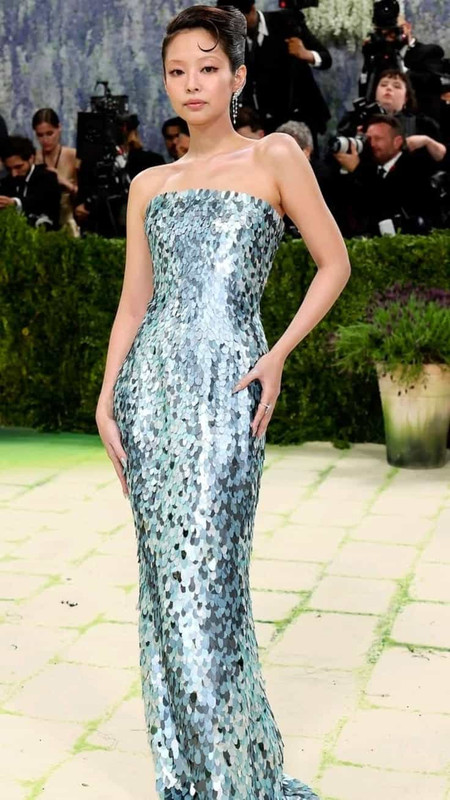
Jennie
ChanelJennie completed the quartet in Chanel, continuing her long association with the house in a refined silhouette defined by precision and elegance. According to Vogue, the global ambassador’s look took 540 hours to create and featured over 15,000 embroidered elements, finished with Chanel High Jewellery in gold and white diamonds.
Impressionism, surreal symbolism, sculptural performance, and classic elegance aligned in one visual breath; BLACKPINK did not simply attend the Met Gala- they arrived like a curated exhibition of four worlds that perfectly complement each other.
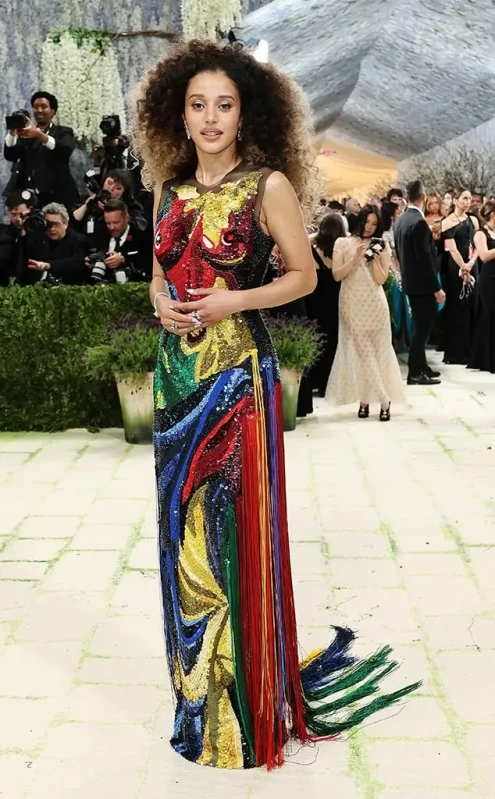
Chase Infiniti
Thom BrowneFresh off her breakout year on screen, winning Best Picture for One Battle After Another, Chase Infiniti arrived at her first Met Gala in a custom Thom Browne gown inspired by the Venus de Milo. Embellished with over 1.5 million sequins in hundreds of shades, the gown recreated the effect of expressive brushstrokes across the body, transforming classical sculpture into a living artwork. Thom Browne, known for treating tailoring as performance art, delivered exactly that, and Chase embodied the evening's theme perfectly- a debut worth remembering.
Eileen Gu
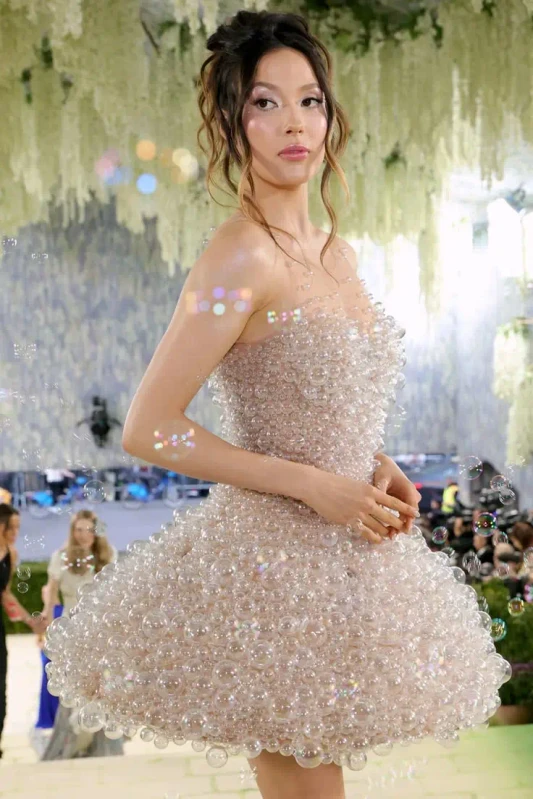
Iris van Herpen × AA MurakamiThe Olympic gold medalist arrived in the Airo dress, a creation by Dutch designer Iris van Herpen, made in collaboration with Tokyo-London studio AA Murakami, and it was unlike anything the Met steps had seen before. Crafted from thousands of iridescent glass bubbles and powered by a hidden system that released real bubbles as she walked, the gown transformed fashion into performance art. The dress did not simply sit on her body but actually it performed.
Inspired by the scientific idea that 99.9% of the human body's atomic structure is empty space, Van Herpen designed the piece to capture both realism and surrealism, expressing the weightlessness and grace of Eileen's athletic form.
Manish Malhotra
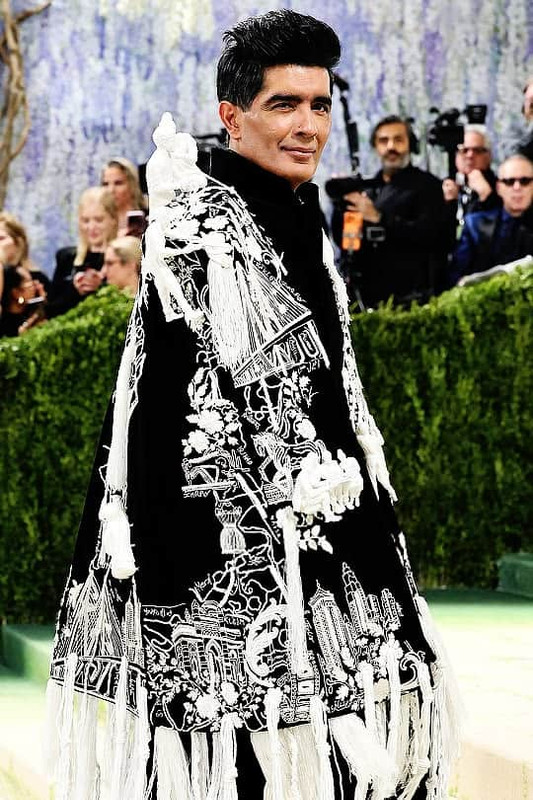
Manish MalhotraIf many guests arrived dressed as works of art, Manish Malhotra arrived wearing the story behind the art itself. His classic black bandhgala, layered with an architectural cape, celebrated the craftsmen and creative process that bring couture to life. Measuring tape motifs, miniature figurines, references to Mumbai’s cinematic landmarks, and even the signatures of the artisans who worked on the ensemble transformed the look into a tribute to collaboration and craftsmanship.
“For my appearance at the Met Gala, I wanted to create something deeply personal- a reflection of Mumbai, the city that has shaped my journey, my cinema, and my sense of design, along with the atelier that brings my vision to life every day- my work family. There is nothing like a classic Indian bandhgala- here layered with an architectural cape, brought to life over 960 hours by more than 50 artisans across Mumbai and Delhi. For me, this is more than a garment- it is a story of craft, memory, and collaboration.”
SZA
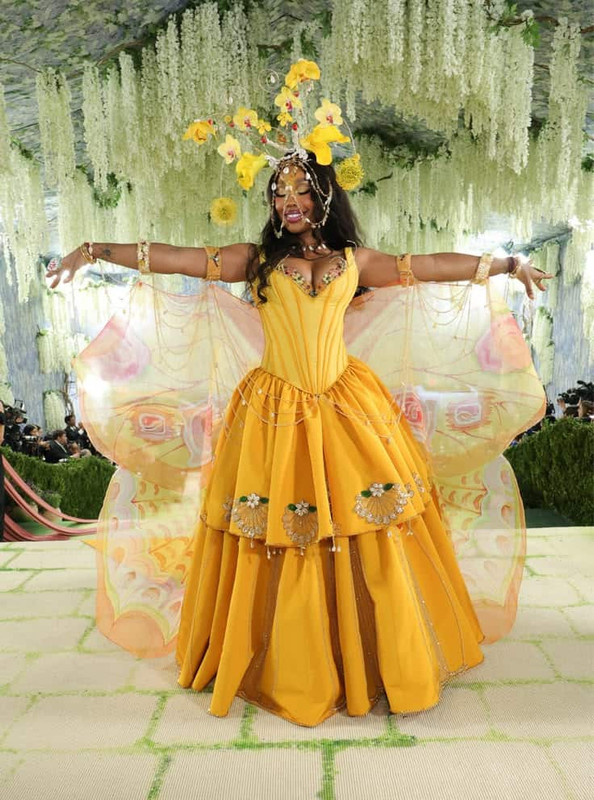
BodeSZA returned to the Met Gala after four years in a custom look by Emily Adams Bode Aujla of Bode. Made from over 100 yards of vintage fabric sourced from eBay, the gown turned sustainability into couture, drawing inspiration from the Wiener Werkstätte’s handcrafted floral aesthetic. A sheer butterfly cape unfurled from her wrists as she moved, transforming the look into subtle performance.
A dress sourced from a secondhand website that made fashion history. That's very SZA.
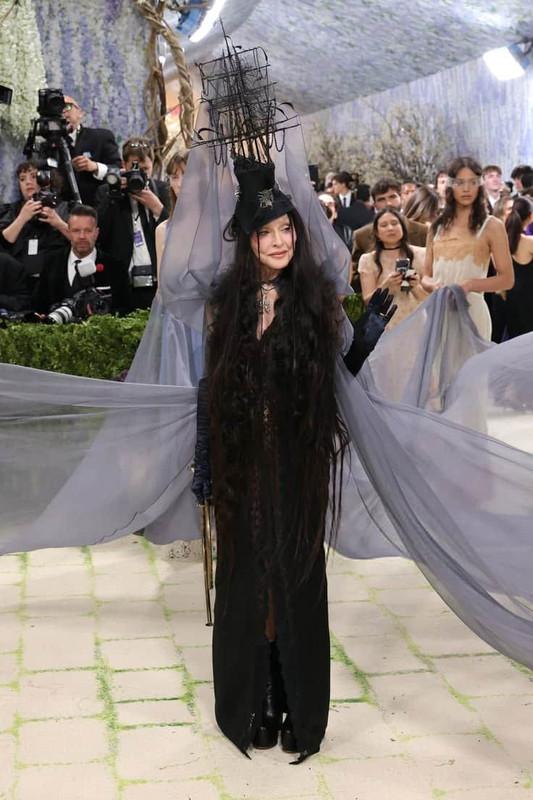
Madonna
Saint LaurentNobody performs the Met Gala quite like Madonna, and 2026 was no exception. Designed by Anthony Vaccarello for Saint Laurent, her look drew inspiration from Leonora Carrington's 1945 painting The Temptation of St. Anthony. Dressed in a black gown, chiffon veil, and a striking pirate-ship hat, she arrived carrying a brass horn and accompanied by seven veiled women. More than fashion, it felt like a surrealist performance brought to life, like a living artwork walking the Met steps.
Across the night, fashion did not remain still but it moved, performed, and spoke. From Impressionist embroidery to cinematic fabric, from sculptural tailoring to surrealist storytelling, the Met Gala became more than a red carpet. It became a curated exhibition of living art. And in that space where clothing becomes meaning, and meaning becomes spectacle, one question remains beneath it all: How does the wow actually happen?
✦ Section III
The How Behind the Wow
The ecosystem of strategy, influence, and economics that shapes fashion's most-watched event
Dressed to Data
Media Impact Value (MIV), is the algorithm that assigns a dollar figure to every press mention, social post, and digital conversation a brand generates. Unlike advertising, you don't buy it. You earn it. And no single night earns more of it than the Met Gala.
The 2026 Gala demonstrated this perfectly. Brands such as Chanel, Dior, and Bulgari generated millions in media value through celebrity appearances alone. Dior, for instance, achieved what analysts described as a perfect MIV trifecta with Sabrina Carpenter, Jisoo, and Sunday Rose on the same carpet- three demographics, three aesthetics, three global markets all in one night.
However, 2026 revealed something new about how MIV is generated. The most successful looks were not necessarily the most beautiful, but the most unforgettable. Eileen Gu's bubble-producing gown, which released real bubbles as she walked, became a perfect example of what marketers call 'Thumb-Stopping Capital'. In today's attention economy, engagement generates data, and data generates revenue.
This is the Halo Effect. The sculptural gown is a deliberate financial loss as it won’t be sold. But it functions as the most efficient advertisement ever made for everything the brand does sell. After Jennie's Met Gala appearances, searches for Chanel No. 5 spiked; after Lisa wore Bulgari, their entry-level jewellery spiked across Southeast Asia. After Sabrina walked in Dior film strips, Dior Beauty's bestselling lip oil trended globally for days. A Met Gala dress may be the spectacle, but the lipstick, perfume, handbag, or jewellery collection is often where the profit lies.
The Most Expensive Door in the World
In 1986, French sociologist Pierre Bourdieu proposed something that the fashion world had always practiced but never named. In his landmark essay The Forms of Capital, he argued that success is not a simple formula wrapped up with a neat little bow. There is far more to getting ahead than money alone.
According to Bourdieu, capital exists in three forms: economic capital (money), cultural capital (knowledge, taste, and aesthetic authority), and social capital (relationships and influence).
If Pierre Bourdieu were alive today, the Met Gala would probably be his favourite event to study. More than a celebrity gathering, it is a place where these three forms of capital collide in real time. Luxury brands bring money, celebrities bring influence, and fashion brings artistic and cultural value.
For decades, entry required more than wealth alone. Guests needed cultural relevance, powerful connections, and perhaps most importantly, the approval of Anna Wintour herself. The architecture of the velvet rope was selective, exclusive, and carefully maintained. The red carpet itself functions as a test of cultural capital. Each year's theme challenges guests to translate art, history, and culture into fashion. Success requires more than an expensive gown; it demands understanding. When critics praise a look or mock one for missing the theme, they are reinforcing the same distinctions Bourdieu described decades ago.
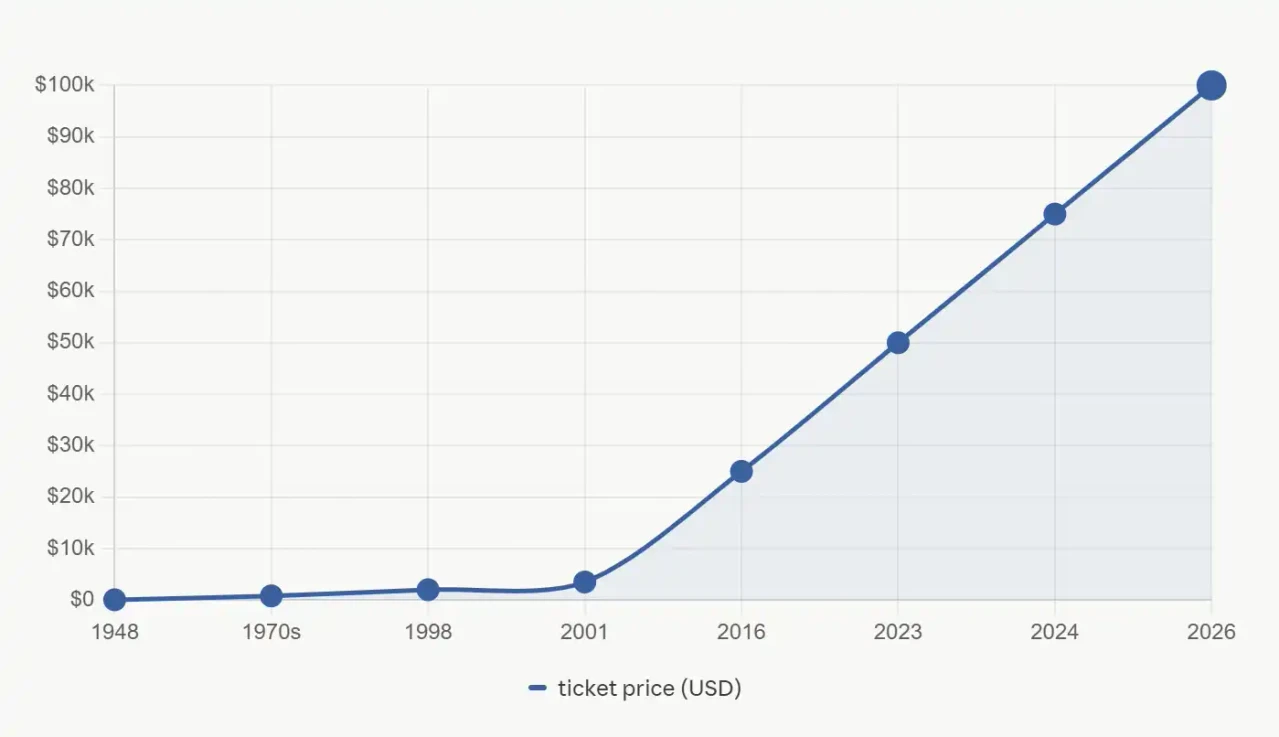
Yet 2026 marked a shift. With tickets reaching $100,000 and corporate tables exceeding $350,000, economic capital became increasingly influential. Perhaps that explains the Met Gala's greatest paradox: the more exclusive it becomes, the more people want to watch. In the age of social media, exclusivity itself has become a spectacle and perhaps the event's most valuable currency of all.
The Stairs as Stock Exchange
An Initial Public Offering (IPO) is the moment a company presents itself to the world, not simply to sell a product, but to sell a vision. While established fashion houses use the Met Gala to reinforce their brand power, for independent designers it can function as a fashion-world IPO.
The gown on the carpet is rarely the product being sold. Instead, it acts as a pitch deck for the designer's entire brand identity. Inside the museum sit luxury executives, investors, acquisition teams, and decision-makers from some of fashion's most powerful companies, including LVMH, Kering, and Richemont.
No designer demonstrated this more clearly in 2026 than Robert Wun. The independent Hong Kong-born couturier dressed eight celebrities in a single, cohesive visual language, positioning his brand before one of the most influential audiences in fashion.
Yet the real challenge begins after the carpet is rolled away. A viral Met Gala moment can spark waves of press coverage, styling requests, wholesale inquiries, and consumer interest. Unlike conglomerate-backed fashion houses, however, independent designers often lack the resources needed to scale production and meet sudden demand. This creates one of fashion's most fascinating paradoxes: a designer can become culturally wealthy overnight while remaining operationally cash-poor. The Met Gala provides visibility, but visibility alone is not a business model. What happens in the months that follow often determines whether a breakthrough moment becomes lasting success.
The Guest List as Market Forecast
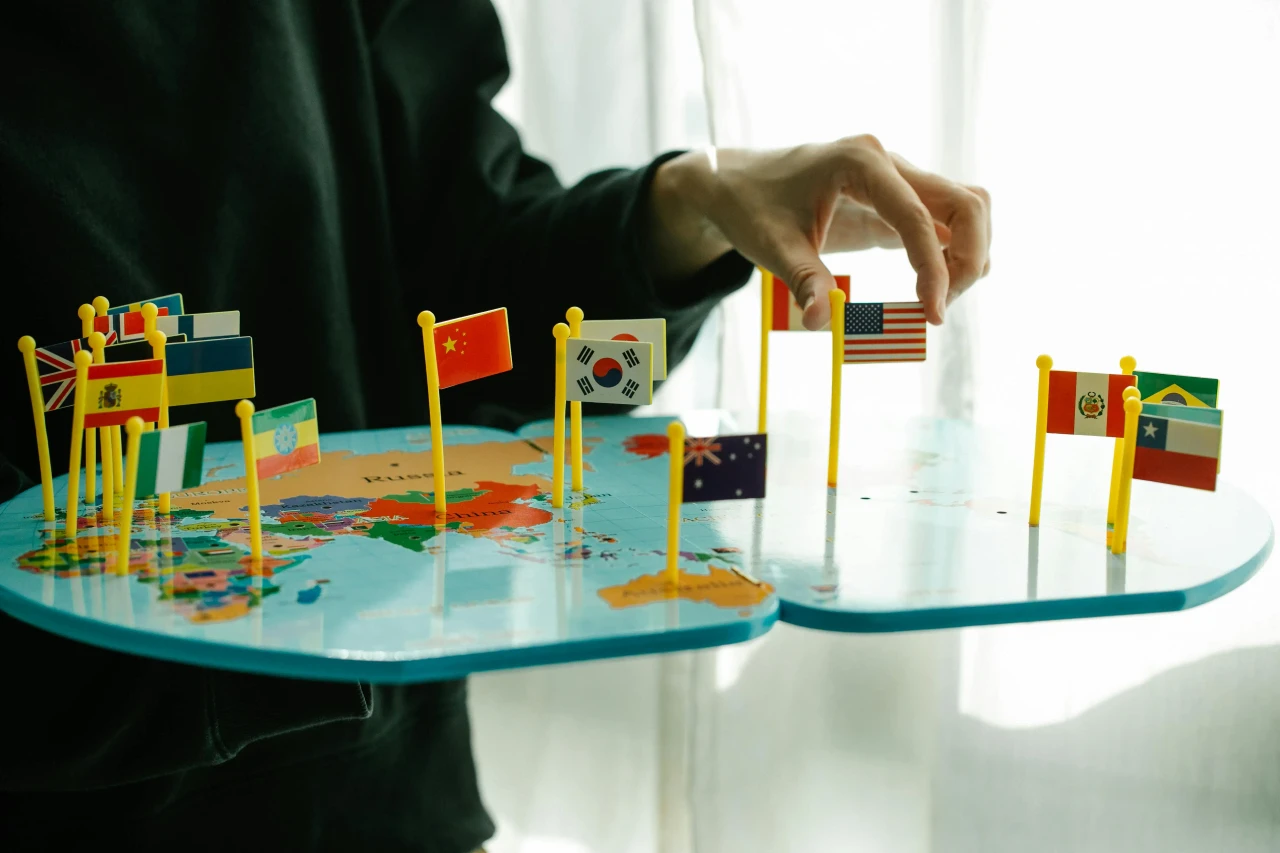
Every year, Anna Wintour decides who belongs in the room. Those decisions may seem cultural, but they also reveal where luxury money is moving.
Trace the guest list through the decades and you trace the market. As Hollywood drove luxury growth in the 2000s, actors and celebrities dominated the carpet. In 2015, China: Through the Looking Glass marked a turning point, bringing many Chinese celebrities to the forefront as brands competed for the world's fastest-growing luxury market. Their presence later declined as the commercial and geopolitical landscape shifted. The gap was filled by Korean and Indian stars. South Korea's luxury market is projected to reach $10.5 billion by 2035, with K-pop driving demand. BLACKPINK's full reunion at the 2026 Met Gala was not merely a pop-culture moment; it was four luxury houses targeting the same high-growth market through four different ambassadors.
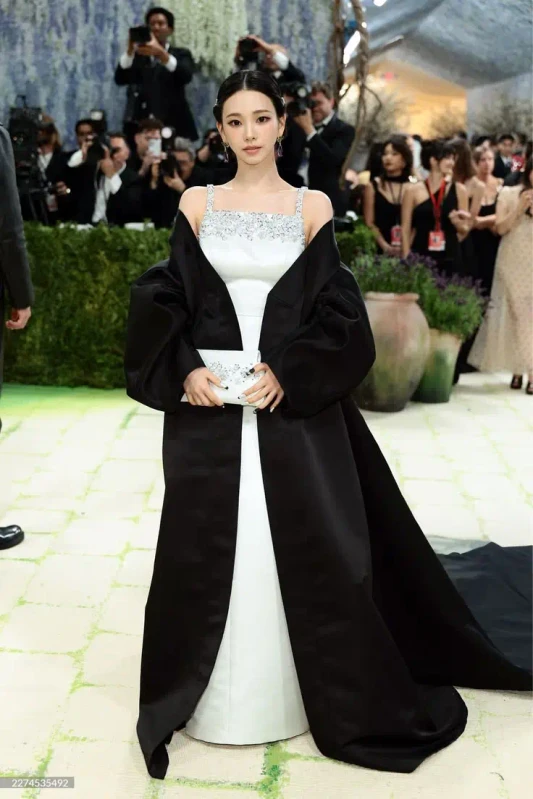
Even Aespa's Ningning made her Met Gala debut in a stunning black Gucci gown of layered ruffles and wave-like detailing, while Karina wore a beautiful white custom Prada gown inspired by the traditional hanbok. Their presence reflected a broader shift: luxury brands are no longer simply marketing to Korea but are also increasingly drawing inspiration from it.
India's signal is stronger still. With its luxury market projected to reach $200 billion by 2030, Indian representation has become increasingly prominent. Isha Ambani in Gaurav Gupta and Manish Malhotra showcasing his own work reflected the growing importance of India's luxury consumer.
Viewed over time, the Met Gala guest list reads less like a record of cultural significance and more like a financial forecast. Who gets invited is not simply about who deserves to be there, but who the industry wants to be seen with next.
From Source to Spotlight
For much of the Met Gala’s history, validation flowed in one direction. Wearing Dior, Chanel, or Saint Laurent signalled entry into the highest ranks of global fashion. Luxury was defined in Paris, and the rest of the world followed. The 2026 carpet suggested a shift.
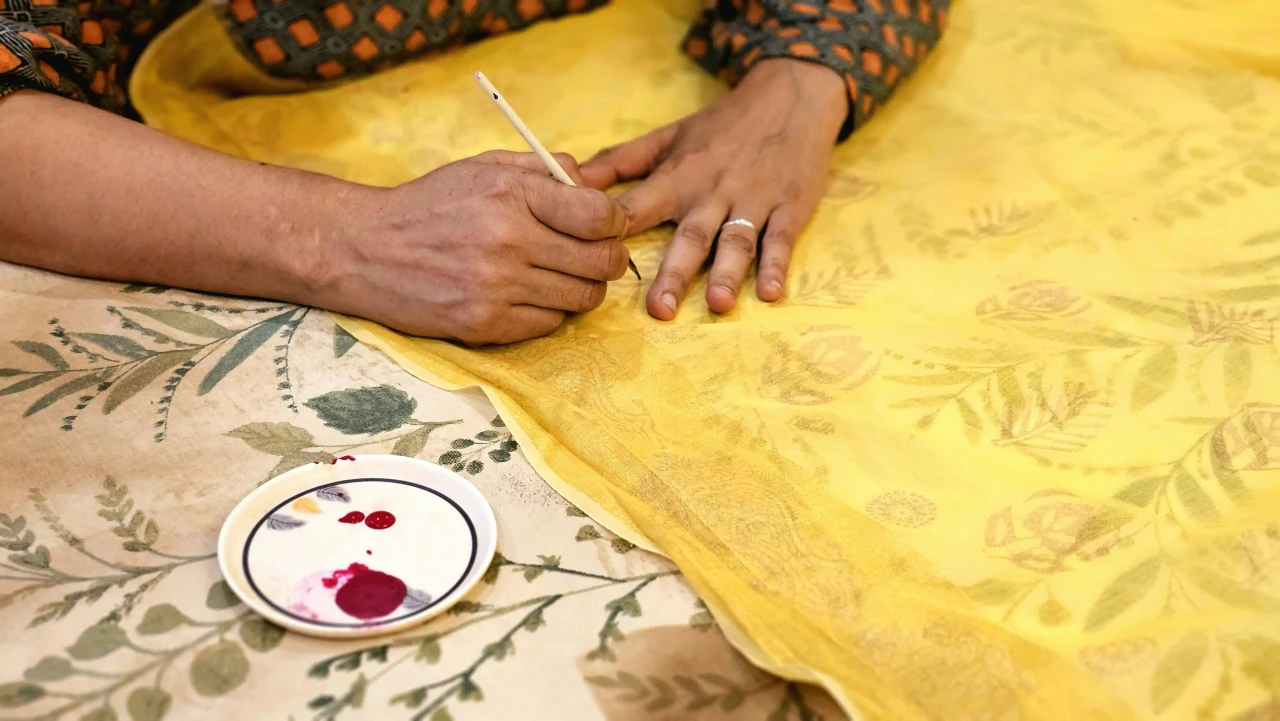
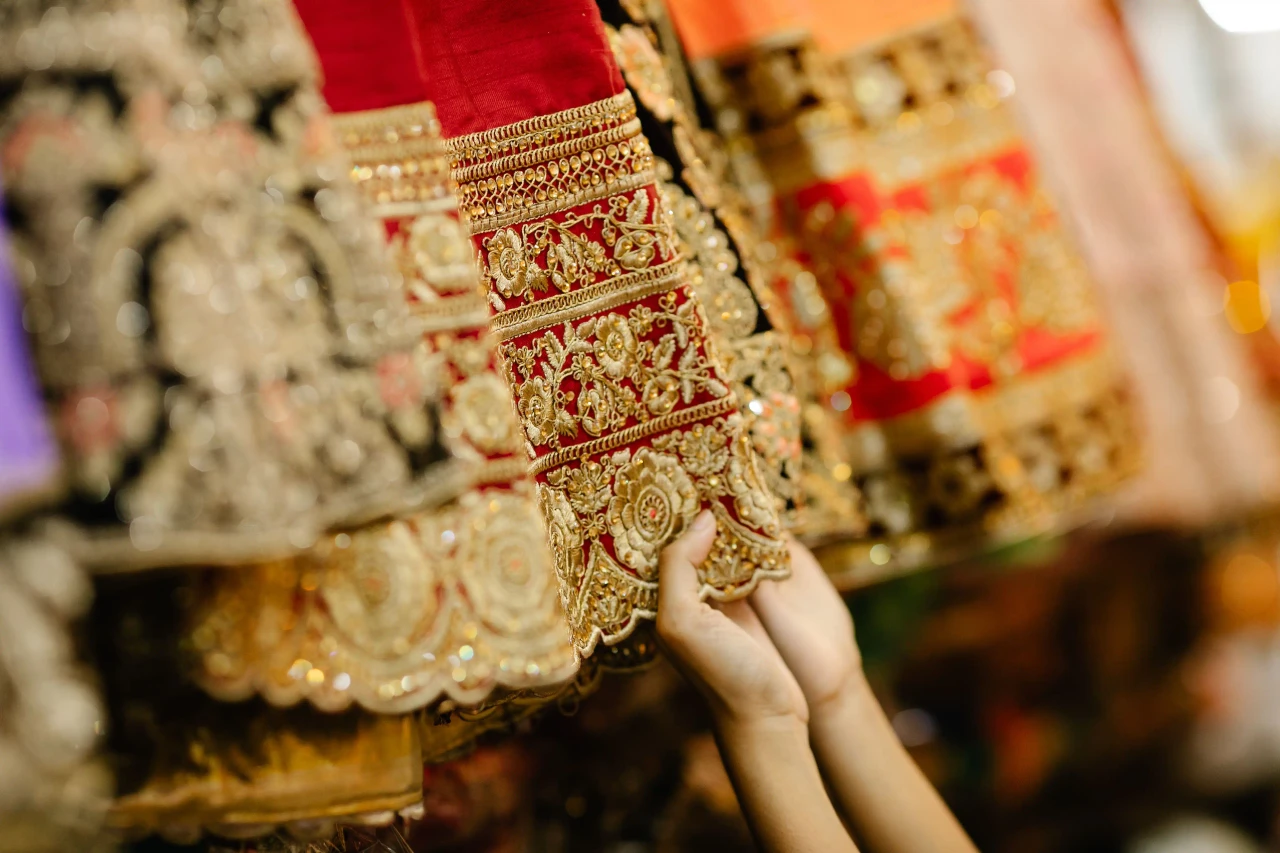
For decades, fashion’s biggest names outsourced intricate hand-stitching and zardozi embroidery to Indian ateliers, while the artisans themselves remained uncredited. The history of Indian haute couture being disrupted by colonial rule added significance to the presence of Isha Ambani and Manish Malhotra at the 2026 Met Gala. They walked onto those steps not as guests of European houses, but as the protagonists of their own narrative. Ambani wore Gaurav Gupta, whose design drew upon Pichwai-inspired artistry, while Malhotra embedded his own artisans’ signatures into his ensemble, a tribute to the hands behind the masterpiece.
The 2026 Met Gala suggested something many luxury houses may not have anticipated: India is not just a consumer market for Western luxury, but a producer of it in its own right.
Sabyasachi Mukherjee saw this early, stepping away from Fashion Week to build a digital-first global presence, noting, “Why bother with front row politics, when the world can be your front row.” He has positioned his label as India’s first global luxury house. Western houses are now competing for the same market. What has changed is simple: India is no longer waiting to be sold to, it is already selling.
The Dupe Economy
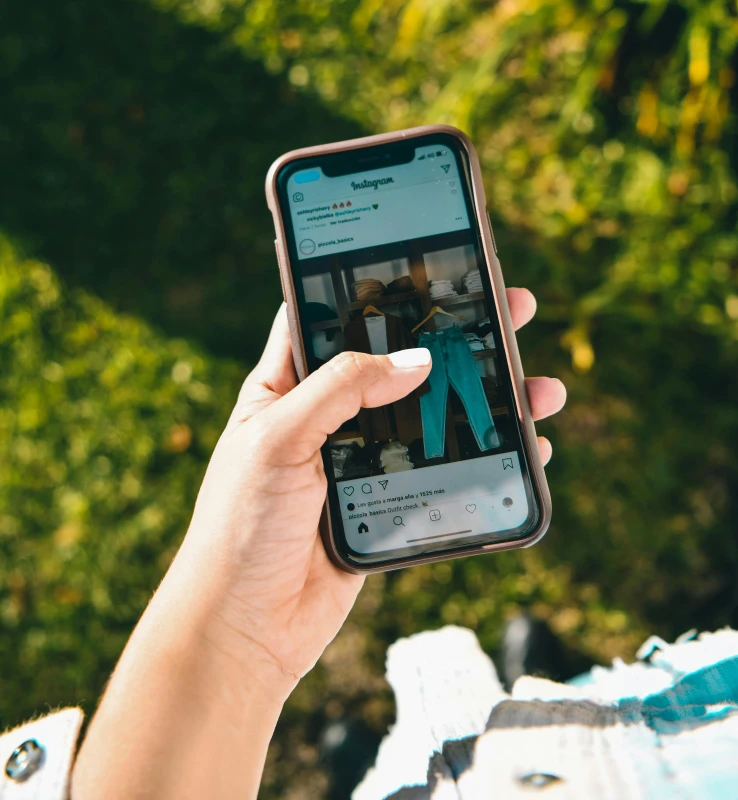
The Met Gala 2026 evolved into a real-time global content economy where couture looks were photographed, dissected, algorithmically amplified, and commercially replicated within hours. A gown worn for ten minutes on those steps becomes a "budget recreation" on social media. Luxury houses cannot and don't even try to stop this. The woman buying a $30 bubble-hem dress from Shein is not a Balenciaga customer. But she is now in a relationship with the aesthetic, and that relationship has a long-term commercial value that no brand can fully calculate or entirely ignore. The dupe economy is fashion's most profitable accident: it validates cultural influence without undercutting the actual customer base. The carpet creates the dream. The dupe economy sells it at scale.
The New Front Row: Gen Z
Luxury houses are increasingly investing in audiences before they reach purchasing power. Louis Vuitton named 20-year-old Olympic gold medalist Alysa Liu its newest brand ambassador, announced on Met Gala night. Liu is a figure skater with 8.3 million Instagram followers and a devoted Gen Z audience.
This logic is strategic rather than symbolic. Liu is not Vuitton’s current customer, she is their future one. Early brand alignment with Gen Z figures significantly increases lifetime consumer value. The same logic appears in Balenciaga dressing Blue Ivy at fourteen. These are not immediate sales strategies but long-term positioning moves.
The Met Gala, in this sense, is no longer just a showcase. It is an onboarding system for the next generation of luxury consumers.
✦ Conclusion
The How Behind the Wow — Rewritten
The Met Gala is often described as fashion’s biggest night, but its real power lies in the careful curation behind it. Beneath the gowns and flashing spotlights, it is a system where value is tested, redirected, and redefined in real time.
Luxury is no longer moving in a single direction from heritage houses to global audiences; it is circulating between markets, generations, and geographies, reshaping itself with every appearance on those steps.
We have always known what makes fashion stop us in our tracks. But as the global balance of power shifts and the curation of culture changes hands, the ultimate question isn't just about what we are wearing- it’s about who is finally rewriting the how behind the wow? ✦
Written by
Mihika
Valence· Met Gala 2026